Las Vegas Construction Accident Lawyer in Nevada

Free Confidential Consultation for Human Trafficking Victims
Free Confidential Consultation for Human Trafficking Victims

If you were injured on a Las Vegas construction site, your workers’ compensation payments might not cover all your losses. Workers’ comp helps with some medical bills and part of your lost wages, but it does not pay for pain and suffering, your full lost income, or the long-term impact of a serious injury.
A Las Vegas construction accident lawyer can help you find every possible source of compensation after a work-site injury, including third-party claims that may cover losses workers’ comp does not. Many construction workers think workers’ comp is their only option. While employers are often protected from personal injury lawsuits, another company or person could still be responsible for unsafe conditions, faulty equipment, or careless work.
THE702FIRM Injury Attorneys explores all possible options, protects your workers’ compensation claim, and pursues a third-party personal injury claim when the evidence supports it. If you or a loved one was hurt on a Las Vegas job site, call us for a free consultation before important records are lost or an insurance company asks for a statement.
A construction accident attorney in Las Vegas will begin by looking at what actually happened, not just what the insurance company says. Our team finds out who was in charge, who created the hazard, and who provided the equipment. We can request Nevada OSHA records, consult safety or engineering experts, document your injuries, calculate your losses, and handle the insurance companies.
A construction injury lawyer in Las Vegas can also coordinate your workers’ compensation claim and any third-party lawsuit, ensuring any legal liens or offsets are addressed. Our guide to the legal process explains how a civil claim moves from investigation to resolution. While no lawyer can guarantee a result, a thorough investigation gives your claim a strong foundation.
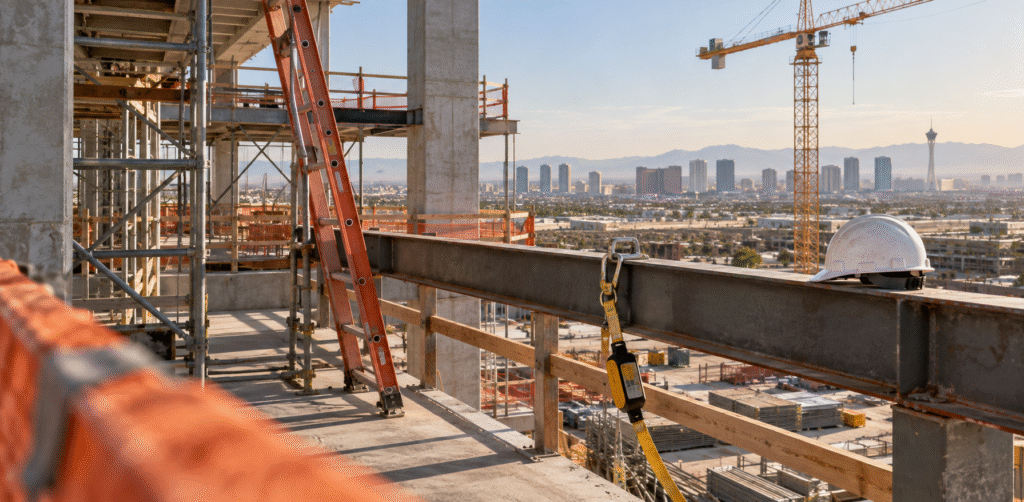
The Occupational Safety and Health Administration highlights four main dangers on construction sites: falls, struck-by accidents, caught-in or between incidents, and electrocution. Many Las Vegas construction accidents fall into these categories, but serious injuries can also happen because of unsafe machinery, vehicles, or work methods.
These events may cause broken bones, burns, crush injuries, spinal damage, brain injuries, amputation, or other severe injuries. A scaffolding accident lawyer in Las Vegas will examine more than the fall itself, including who erected and inspected the platform, who supplied its parts, and whether required fall protection was available.
Workers’ compensation and a third-party claim are different legal routes. Under NRS 616A.020, workers’ compensation benefits are generally the exclusive remedy against an employer for an accidental injury arising out of and in the course of employment. The system usually does not require injured workers to prove employer negligence, and it pays benefits such as authorized medical treatment, wage-replacement payments under NRS 616C.475, permanent disability benefits, and vocational rehabilitation when the statutory requirements are met. Our Las Vegas workers’ compensation page covers how those benefits, forms, and appeals work in detail.
A third-party claim for a construction site injury is based on legal responsibility outside the employer-worker relationship. NRS 616C.215 covers injuries caused by someone other than your employer or a co-worker. With enough proof, this separate personal injury claim can seek damages workers’ comp does not cover, such as full lost wages, reduced future earning ability, and pain and suffering. This is why a third-party claim can be worth more than comp alone, though the workers’ comp insurer may have a legal right to part of your recovery. Careful coordination helps you avoid missing benefits, double counting, or disputes over repayment.
Responsibility depends on who had a duty to keep the area safe, who controlled the work or location, and what caused the injury. A general contractor might be liable for unsafe coordination or control. A subcontractor or another trade could be responsible for a hazard it created. Property owners may be liable for dangerous conditions they control. Equipment manufacturers or distributors can be at fault if defective equipment is involved. Delivery companies, engineers, maintenance vendors, or other construction companies might also play a role. Liability is based on the facts, not just job titles or contracts.
Nevada’s comparative-negligence rule also matters. Under NRS 41.141, an injured person may recover when that person’s share of negligence is not greater than the defendant’s or the combined defendants’ negligence, and the award is reduced by the injured person’s percentage of fault. Because the comparison is to the defendants’ combined share, a worker found more than half at fault generally cannot recover at all. That makes proving negligence, control, causation, and each party’s role central to a third-party action.
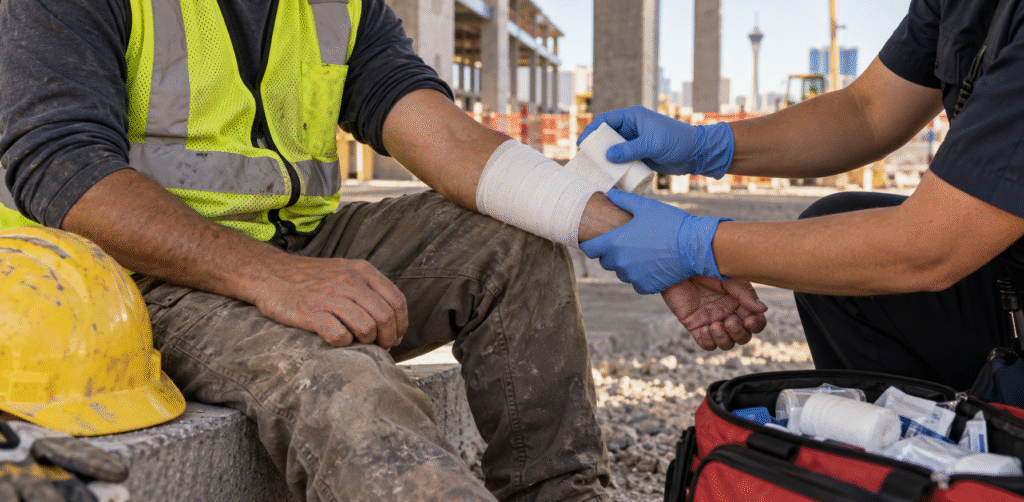
Nevada OSHA enforces occupational safety rules, including the federal construction standards in 29 CFR Part 1926. Under NRS 618.295, standards promulgated by the United States Secretary of Labor are deemed Nevada occupational safety and health standards unless the Division adopts alternatives that provide equal protection, and Nevada OSHA publishes the applicable regulations. An inspection file or citation can help show what safety rule applied, what condition an inspector observed, and whether the cited employer failed to correct a known hazard. NRS 618.465 governs the issuance of citations, which identify the alleged violation and set a period for abatement.
A citation is evidence to investigate, not automatic proof that a defendant owes civil damages. It may be contested, it may concern an entity that is not a proper civil defendant, and the safety violation must still connect to the accident and sustained injuries. We compare inspection notes, photographs, witness interviews, training files, and site records with the applicable rule. That broader record can support a claim without treating an agency finding as the final word on liability.
Possibly. In Nevada, workers’ compensation is usually the only remedy against your employer for a work accident, but you might have a legal case against someone else who was negligent. Whether you can file a third-party lawsuit depends on contracts, who controlled the site, who owned the equipment, and where the hazard came from.
A third-party claim is a case against someone other than your employer or a co-worker who is legally responsible for your injury. This could be another contractor, a property owner, or a product manufacturer. Any money you recover must be coordinated with the workers’ compensation insurance company’s rights to repayment.
Workers’ comp can cover an accepted work injury by paying for approved medical care and certain disability or wage-replacement benefits. It usually does not pay for pain and suffering. For how coverage, provider choice, work restrictions, permanent impairment, and vocational services are decided, see our Las Vegas workers’ compensation lawyer page.
There may be several deadlines at the same time. Report your injury right away, fill out and sign the C-4 form when you get treatment, and ask a lawyer to keep track of every deadline. The workers’ comp process, a civil claim, an appeal, and claims involving public entities can all have different time limits.
A third-party personal injury lawsuit can seek both economic and non-economic damages, as long as evidence supports them. Economic losses include past and future medical bills, physical therapy, rehab costs, lost income, reduced earning ability, and future care expenses. Non-economic damages cover pain, emotional distress, disfigurement, and loss of enjoyment of life. The type and value of your claim depend on medical evidence, your work history, prognosis, available insurance, comparative fault, and other case-specific details.
If a construction accident is fatal, workers’ compensation may provide death benefits, and a separate wrongful death claim may be possible if a third party is responsible. Family members should get advice on both options, since the rules, deadlines, and types of compensation differ. We work to recover what the evidence and Nevada law support, but we cannot promise a specific result or amount.
Nevada uses separate deadlines for workers’ compensation and civil claims. NRS 616C.015 generally requires written notice to the employer as soon as practicable and within seven days after the accident. If the worker receives medical treatment or misses work, NRS 616C.020 generally requires filing the compensation claim with the insurer within 90 days. Limited exceptions may excuse late notice or filing.
For most third-party injury and wrongful death cases, NRS 11.190 gives you two years to file, and our overview of the statute of limitations explains how that period generally runs. Other rules may apply if a public entity is involved, if the injury was discovered late, if a minor is involved, or for other legal reasons. Do not assume one deadline covers both claims. Reviewing your case early helps your lawyer preserve the job site and collect evidence on time.

Keep all your records together, including the incident report, C-1 or C-4 forms, medical restrictions, letters from your employer or insurer, photos, and witness contact information. Then, call THE702FIRM Injury Attorneys to schedule a free consultation. We will review your legal options, explain the next steps, and see if our firm can help you.