Las Vegas Golf Cart & Low-Speed Vehicle Accident Lawyer in Nevada
Free Confidential Consultation for Human Trafficking Victims
Free Confidential Consultation for Human Trafficking Victims
A golf cart accident lawyer can help identify who should answer for a crash involving a golf cart or low-speed vehicle in Las Vegas. These vehicles may move at lower speeds than passenger cars, but riders can still suffer serious injuries when a cart tips, someone is ejected, or another vehicle strikes them.
Liability may fall on a negligent operator, a golf course, a cart rental company, another driver, or a manufacturer if a defect (a problem with the product) caused or contributed to the injury. A golf cart accident attorney at THE702FIRM Injury Attorneys can investigate what happened, determine which Nevada rules apply, recover compensation, and pursue the parties responsible for your losses. Contact us to schedule a free consultation.
Nevada law does not treat every small, cart-like vehicle the same. Under NRS 482.044, a golf cart is a motor vehicle with at least three wheels that is designed to carry golf equipment and no more than four people, including the driver. A low-speed vehicle, or LSV, falls under a different rule. NRS 484B.637 defines an LSV as a four-wheeled motor vehicle capable of more than 20 mph but no more than 25 mph on a paved, level surface, with a gross vehicle weight rating under 3,000 pounds and compliance with applicable federal low-speed-vehicle safety standards.
That distinction affects street use. A registered LSV may generally operate on a Nevada highway with a posted speed limit of 35 mph or less and may cross a faster road at an intersection. Golf carts may be driven on public streets only where the appropriate local government has approved their use. In the City of Las Vegas, golf cart operation is governed by Municipal Code Chapter 11.41, which designates where carts may be driven.
Registration, DMV golf cart permit, and insurance requirements can also differ depending on whether the vehicle is a golf cart or an LSV, where it is used, and the purpose of the trip. Nevada DMV guidance states that a permit and insurance are required in certain Clark County developments where carts are used as general transportation, with the permit costing $10 annually. Low-speed vehicles, by contrast, are subject to the same registration, insurance, tax, and emissions requirements as other vehicles.
Because legal status can turn on location and use, a low-speed vehicle accident should be reviewed by an attorney before conclusions are drawn about compliance or fault.
A golf cart accident attorney looks beyond the person who happened to be behind the wheel. Nevada negligence claims generally require proof of a duty, breach, causation, and damages. The evidence may point to one responsible party or several.
 Golf carts and low-speed vehicles are used in more places than a traditional golf course. In the Las Vegas area, an accident may happen in a retirement community, resort, master-planned community, private development, parking area, or on a street where the vehicle is permitted to operate.
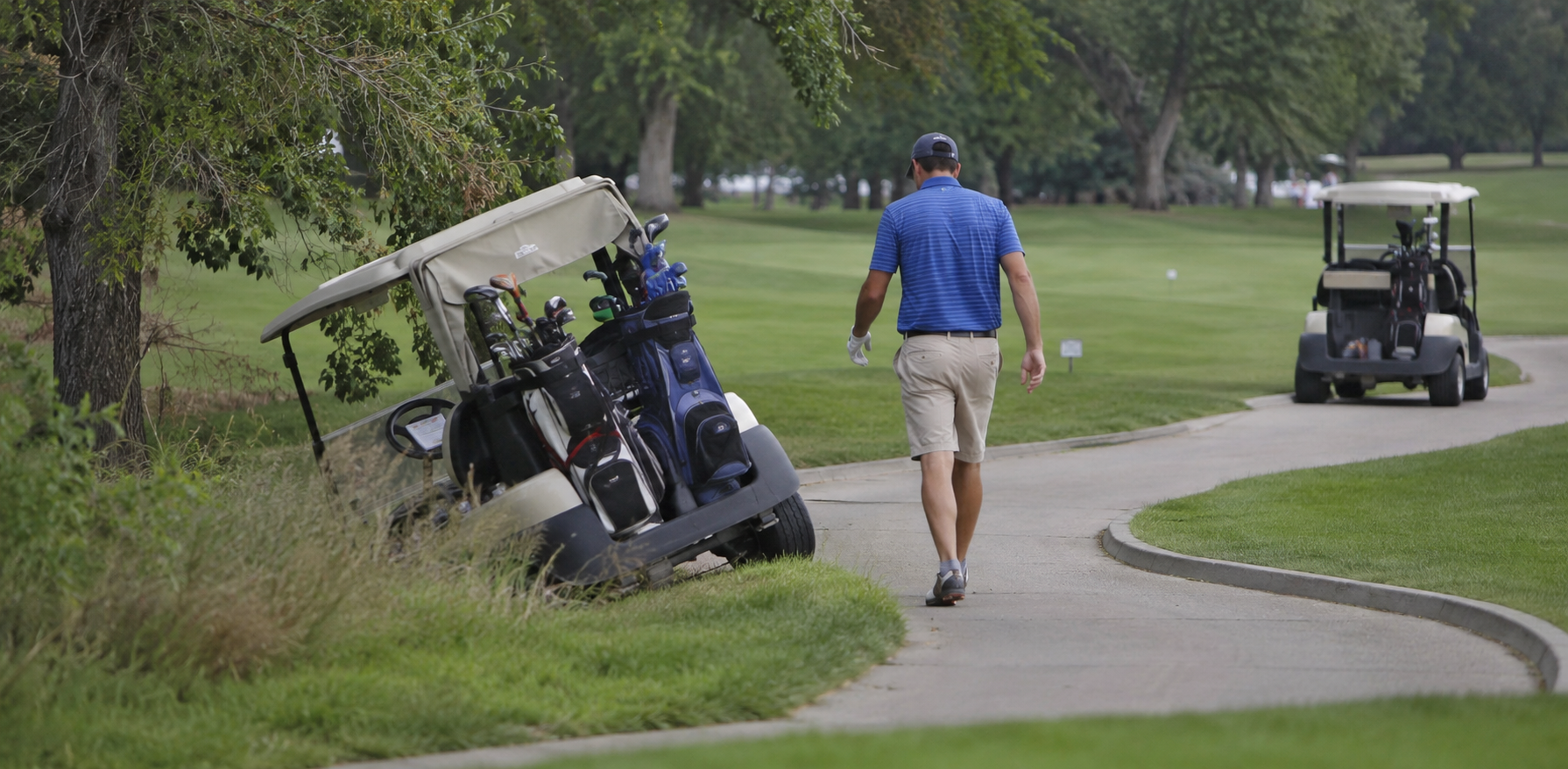
Golf courses present their own risks. A cart can collide with another cart, strike a pedestrian, leave a path, or tip on an incline. Rental carts at resorts or recreational properties may be operated by people who are unfamiliar with the vehicle, and course conditions can raise the same slip, trip, and premises hazards found on any commercial property.
Retirement communities, including Sun City-style developments, can also have frequent golf cart traffic near homes, community facilities, and crossings. When a crash occurs on an approved public route, traffic laws, permit status, insurance coverage, and the conduct of other motorists may all become relevant.
The location matters because the evidence and potentially responsible parties can change depending on whether the accident happened on private property or a public roadway, and because premises liability principles may apply when a property owner controlled the hazard.
Whether the vehicle was legally operating as a golf cart or a low-speed vehicle can affect both liability and available insurance coverage. Attorneys may need to determine whether the vehicle was registered when registration was required, whether a golf cart permit applied, whether required insurance was in place, and whether the vehicle was being operated on an approved route.
Those facts do not decide a personal injury claim by themselves. They become part of the broader analysis of what caused the accident and which parties had legal responsibilities. An insurance company may also examine whether the operator followed traffic laws, whether another motor vehicle contributed to the crash, and whether the injured person’s own actions played a role.
Nevada follows a modified comparative-negligence rule under NRS 41.141. A person’s compensation may be reduced by that person’s percentage of fault, and recovery can be barred when the person’s negligence is greater than the combined negligence of the parties from whom recovery is sought. In practical terms, the 51% bar can make careful evidence collection important when fault is disputed.
A golf cart injury can be severe even at relatively low speeds. Traditional golf carts do not provide the same occupant protection found in passenger motor vehicles, and many lack features such as enclosed doors, airbags, or standard seat belts.
In most Nevada personal injury cases, the filing deadline is generally two years. NRS 11.190(4)(e) provides a two-year limitations period for an action seeking damages for injuries or death caused by another person’s wrongful act or neglect. That does not mean every golf cart accident case has the same deadline. Different facts, parties, or legal claims can affect when a deadline begins or whether another rule applies, so it is worth confirming the deadline that applies to your claim.
Waiting can also create evidence problems before the statute of limitations expires. Surveillance video may be overwritten, a rental cart may be repaired, witnesses may become difficult to locate, and records may be harder to obtain. Speak with a lawyer early enough to identify the applicable deadline and preserve the evidence needed for your claim.
The liable party may be the golf cart driver, another driver, a golf course or rental company, or a manufacturer, depending on the cause of the accident. Some golf cart accident cases involve multiple parties. Evidence such as photographs, witness statements, maintenance records, and insurance information can help determine responsibility.
Possibly. A golf course or rental business is not automatically liable simply because an accident happened on its property or involved its cart. A claim may exist if evidence shows negligent maintenance, unsafe conditions, improper rental practices, or another wrongful act contributed to the injuries. The specific facts must be investigated.
A tip-over does not always mean the golf cart driver was solely responsible. An investigation may examine speed, the turn or slope involved, passenger loading, tire or brake condition, roadway or path conditions, and possible vehicle defects. Preserving the cart and documenting the accident scene can be important in determining why it flipped.
The answer depends on the vehicle and how it is being operated. Nevada’s golf cart permit statute, NRS 482.398, requires evidence of insurance when applying for a permit and includes a limited exception to the permit requirement. Registered or registration-required motor vehicles are generally subject to Nevada liability-insurance requirements.
THE702FIRM Injury Attorneys investigates how the crash happened before deciding where responsibility may lie. That can include reviewing the golf cart or low-speed vehicle, the accident location, available photographs, police reports, witness statements, rental documents, maintenance information, and applicable permit or registration records.
We also review insurance details and communicate with insurance adjusters while the claim is being developed. If a mechanical problem may have contributed, the investigation can include the brakes, tires, steering system, modifications, or other components before the cart is repaired or discarded.
For serious injuries, the legal team reviews medical treatment and records to document the harm caused by the accident. Depending on the facts, a personal injury claim may seek financial compensation for medical costs, lost wages, reduced earning ability, property damage, and legally recoverable non-economic damages such as pain and emotional trauma.
Nevada’s comparative-negligence rules can also make liability especially important to determine when an insurance company argues that the injured person shared responsibility.
Our law firm handles qualifying personal injury cases on a contingency-fee basis. There is no attorney’s fee unless we win or obtain a recovery for you. Past performance never guarantees the result of a future case.

After a golf cart crash, important details can disappear quickly. A rental company may repair the cart, a resort’s security footage may be overwritten, and witnesses may remember the incident differently over time. Speaking with a lawyer early gives you a better opportunity to preserve those details and identify the responsible parties.
Contact us for a free consultation about your Las Vegas accident. Tell us where the crash happened, how it occurred, and what injuries you suffered. Our experienced personal injury lawyer can review the available evidence and help you decide what to do next.