Nevada Rideshare Accident Lawyer for Uber and Lyft Crashes

Free Confidential Consultation for Human Trafficking Victims
Free Confidential Consultation for Human Trafficking Victims
A rideshare crash in Nevada often raises immediate questions that a typical car accident does not. This is especially true when multiple insurance policies, app data, and out-of-state drivers are involved. Whether you were injured as an Uber or Lyft passenger on the Las Vegas Strip, struck by a rideshare vehicle near a hotel pickup zone, or hurt while driving your own car, determining who is responsible and which coverage applies can quickly become complicated.
Unlike a standard collision, a rideshare accident may involve the driver’s personal insurance, a rideshare company’s policy that changes based on the driver’s app status, and potentially other drivers or entities. Critical details can directly affect how your claim is handled and what compensation may be available.
THE702FIRM Injury Attorneys represents injured passengers, motorists, pedestrians, cyclists, and rideshare drivers across Las Vegas and throughout Nevada. If you were hurt in an Uber or Lyft crash, contact our team today for a free consultation to understand your rights and next steps.
The main difference is the number of people, businesses, policies, and digital records that may be involved. A typical collision may involve two drivers and their personal auto insurers. An Uber or Lyft accident could also involve:
The driver’s app status is usually the starting point for determining insurance coverage. Nevada law divides rideshare activity into different periods. The applicable policy may change depending on whether the driver was offline, available for a request, traveling to a pickup, or carrying a passenger.
| Driver’s status | Coverage that may apply |
|---|---|
| The app is off | The driver’s personal insurance generally applies as it would in another motor vehicle accident. |
| The app is on, but no ride has been accepted | Nevada requires at least $50,000 in bodily injury coverage per person, $100,000 per accident, and $25,000 for property damage. |
| A ride request has been accepted | The higher transportation-services coverage generally applies while the driver travels to the passenger. |
| A passenger is in the rideshare vehicle | Nevada requires at least $1 million in applicable transportation-network-company insurance for bodily injury, death, and property damage arising from one crash. |
| Another driver causes the collision | The at-fault motorist’s liability insurance may be the primary source of recovery, with other available policies evaluated for additional coverage. |
Effective October 1, 2025, Nevada reduced the minimum coverage required while a driver is providing transportation services from $1.5 million to $1 million. The crash date therefore matters when evaluating the minimum policy that applied.
The Nevada Division of Insurance describes the principal rideshare periods as follows: the driver is available for a passenger, has accepted a request and is traveling to the pickup, or is transporting the passenger until the passenger exits. It also warns that many personal auto policies exclude coverage while the driver is engaged in rideshare activity.
No. An insurance limit is the maximum amount a policy may make available under its terms. It is not an automatic payment or a guarantee of a case’s value. The amount that may be recovered depends on factors such as:
Insurance companies may also challenge whether the driver was actively using the Uber app or Lyft platform when the accident occurred. App records and trip timestamps can help resolve that dispute.
Underinsured motorist coverage may become relevant when the person responsible for the crash does not have enough liability insurance to cover the losses.
The availability of this protection depends on the applicable policies and their terms. It should not be assumed that every commercial rideshare policy includes the same optional benefits. The Nevada Division of Insurance warns that gaps may exist in optional protections such as medical payments, collision, comprehensive, and uninsured or underinsured motorist coverage during rideshare activity.
An attorney can request all potentially applicable policies rather than relying solely on what an adjuster says is available.
Several types of injured people may have the right to seek compensation.

An Uber or Lyft passenger is rarely responsible for how the vehicles involved were operated. A passenger may have a claim against the rideshare driver, another motorist, or both, depending on who caused the collision.
A passenger should preserve the complete ride receipt, driver profile, license plate information, pickup and destination details, trip map, and all communications in the rideshare app.

A person does not need to be using a rideshare service to have a claim involving its insurance.
For example, a Las Vegas Uber driver may collide with another vehicle while traveling to pick up a passenger. The occupants of the other vehicle may be able to access coverage linked to the driver’s active app status.

Uber and Lyft drivers may be injured because of another motorist’s negligence. Their claim may involve the at-fault driver’s policy, their own available coverage, a rideshare endorsement, or another policy connected to the trip.
Coverage disputes can become complicated when the driver’s personal insurer argues that the vehicle was being used for rideshare services.

Pedestrians and cyclists may be struck while a rideshare driver is looking at navigation instructions, approaching a pickup point, pulling away from a curb, or making an unsafe turn.
Their right to recover does not depend on being a passenger. The central questions are who caused the crash and which policy applied at that moment.

A fatal rideshare crash may support a wrongful death claim. Eligible family members or the estate may be able to pursue compensation for losses that can include funeral costs, lost financial support, loss of companionship, and other damages recognized by Nevada law.
These cases have strict deadlines and require careful review of all available policies.
Liability depends on how the collision happened. More than one person or business may share responsibility.
A rideshare driver may be liable for conduct such as:
Evidence of negligence may come from the police report, witness statements, photographs, video, electronic vehicle data, phone records, and app activity.
Other drivers frequently cause collisions involving rideshare vehicles. A speeding, distracted, impaired, or uninsured motorist may be the principal at-fault party even when the injured person was riding in an Uber or Lyft.
When multiple vehicles are involved, each driver’s conduct should be investigated independently.
Uber and Lyft commonly classify their drivers as independent contractors. Current Nevada law states that a transportation network company is not vicariously liable for an act or omission of a driver or passenger that harms a person or property.
That rule does not mean rideshare insurance coverage disappears. It also does not resolve every possible claim involving a company’s own conduct. Whether a direct claim can be made against a rideshare company depends on the facts and the legal theory involved.
An attorney should distinguish between:
A vehicle owner may bear responsibility in certain circumstances. A repair facility may be liable for negligent work, while a manufacturer may be responsible for a defective tire, brake component, steering system, or other product. These Uber or Lyft accident claims often require an inspection before the vehicle is repaired, sold, or destroyed.
A dangerous road, a defective traffic signal, a missing sign, a construction hazard, or a poorly maintained public area may contribute to a collision. Claims against public entities can involve special procedures and notice requirements. An injured person should not assume the standard filing timeline is the only deadline that applies.
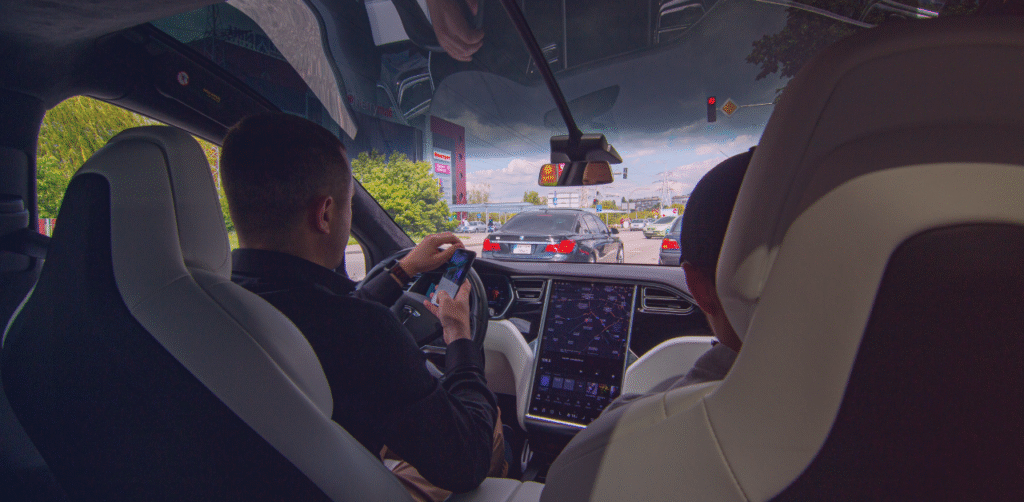
Uber and Lyft accidents can result from the same unsafe conduct seen in other car crashes, but rideshare work can create additional distractions and pressures.
Common causes include:
In a serious rideshare crash, the cause should be established through evidence rather than assumptions based only on the police report.
Move away from traffic when it is safe to do so. Do not leave the accident scene unless emergency medical care requires it.
Request police assistance and emergency medical attention. A police report can document the people and vehicles involved, witness information, road conditions, apparent injuries, and preliminary observations.
Seek prompt medical attention after a collision. Some symptoms may not be obvious immediately, particularly after the stress and adrenaline of a crash.
Tell the medical provider how the injury occurred and accurately describe every symptom. Follow recommended treatment and attend follow-up appointments.
Take wide and close photographs of the vehicles, damage, road, traffic signals, debris, skid marks, pickup area, and visible injuries.
For a Las Vegas rideshare accident, also note whether the crash happened near a casino entrance, hotel pickup zone, airport area, convention center, or construction site where surveillance may be available.
Obtain the names, phone numbers, driver’s license details, license plates, and insurance information of the drivers involved.
Do not rely only on the information displayed in the Uber or Lyft app.
Take screenshots of the ride receipt, route, driver profile, messages, and all available timestamps before the information changes or becomes difficult to access.
Use the appropriate safety or accident-report feature. Keep copies of all confirmations and communications.
Report the facts, but avoid guessing about fault, the extent of your injuries, or how quickly you will recover.
An adjuster may ask for a recorded statement shortly after the crash. You may not yet know the complete diagnosis, future medical care, or all available insurance coverage.
Do not sign a release or accept a settlement without understanding which claims and parties the agreement would cover.
Legal advice can be especially valuable when liability is disputed, the injuries are serious, several insurance companies are involved, the driver’s app status is unclear, or the injured person lives outside Nevada.
A personal injury claim should account for the ways the accident has affected the injured person—not only the expenses that have already arrived. Recoverable losses may include:
A claim may include emergency transportation, hospital care, diagnostic testing, surgery, rehabilitation, medication, specialist care, medical equipment, and other necessary treatment.
Serious injuries may require future surgery, physical therapy, pain management, home assistance, or long-term treatment. Future needs should be evaluated before resolving the insurance claim.
An injured person may seek compensation for time missed from work. A claim may also include reduced earning capacity when lasting injuries prevent the person from returning to the same occupation or working the same hours.
Nevada law may permit compensation for physical pain, emotional distress, inconvenience, disability, scarring, and reduced enjoyment of life.
Recoverable property losses may include vehicle repairs, replacement costs, towing, storage, rental transportation, and damaged personal belongings.
When a collision is fatal, eligible claimants may seek damages connected to medical expenses, funeral costs, lost support, grief, and loss of companionship, subject to Nevada law.
No responsible attorney can determine fair compensation from a brief description alone. The value of a rideshare accident claim depends on the available evidence, the injuries, fault, insurance limits, treatment history, prognosis, and the effect on the person’s life.
The answer usually depends on the driver’s app status. The driver’s personal policy may apply when the app is off. Different rideshare insurance coverage may apply when the driver is waiting for a request, traveling to a pickup, or carrying a passenger.
Yes. A Lyft passenger may have a claim against the driver who caused the crash and any applicable insurance policy. This may be the Lyft driver, another motorist, or multiple parties.
The other driver’s liability insurer may be responsible. Additional policies may need to be reviewed if the at-fault driver is uninsured or has insufficient coverage.
Not automatically. Nevada limits the vicarious liability of transportation network companies for a driver’s conduct. A direct claim against a rideshare company requires a legally supportable theory based on the specific facts. Seeking coverage through a rideshare policy is not the same as establishing direct company liability.
When the driver was logged into the app and available but had not accepted a ride, Nevada requires minimum coverage of $50,000 per injured person, $100,000 per crash, and $25,000 for property damage.
There is no standard payment. The amount depends on fault, injuries, medical treatment, lost income, available insurance, policy terms, and the strength of the evidence.
Yes, but keep a copy of the report and confirmation. Provide factual information without speculating about fault or stating that you are uninjured before receiving appropriate medical attention.
A denial does not always end the case. The insurer may have relied on incomplete app information, a disputed policy exclusion, an incorrect fault determination, or insufficient medical documentation. An attorney can review the denial and supporting policy language.
Not every collision requires legal representation. A consultation may still be useful when symptoms continue, liability is disputed, several policies are involved, or the insurer requests a broad release.
THE702FIRM Injury Attorneys offers a free consultation so an injured person can learn about the potential claim, relevant deadlines, and possible next steps without paying an initial consultation fee.
Nevada follows a modified comparative-negligence rule. An injured person is not automatically prevented from recovering because they share some responsibility.
Under NRS 41.141, recovery is generally permitted when the person’s negligence is not greater than the negligence of the defendant or combined defendants. Compensation is then reduced according to the injured person’s percentage of fault. For example, a person with $100,000 in proven damages who is assigned 20% of the fault may have the award reduced to $80,000.
Insurance companies may use this rule to shift responsibility and reduce what they pay. Evidence should be preserved before accepting an adjuster’s version of how the accident occurred.
Most lawsuits seeking compensation for personal injuries caused by another person’s negligence must be filed within two years under NRS 11.190. That does not mean every deadline is exactly two years.
The applicable period may be affected by:
Reporting a crash to Uber, Lyft, or an insurance company does not necessarily satisfy the deadline for filing a lawsuit. Early investigation also helps preserve critical evidence before video is overwritten, witnesses become difficult to locate, vehicles are repaired, or electronic records are lost.
A lawyer can handle the legal and insurance process while the injured person focuses on medical treatment and recovery.
Depending on the case, the firm may:
A claim is often stronger when the legal team can explain both why the collision happened and how the injuries have changed the client’s daily life.
You may still pursue a Nevada claim even if you returned home after the crash. Visitors are frequently injured while traveling between Harry Reid International Airport, Strip hotels, casinos, restaurants, convention centers, and entertainment venues. An out-of-state client may be able to communicate with an attorney, provide documents, and attend many meetings remotely.
After leaving Las Vegas:
Whether a client must return to Las Vegas later depends on how the claim develops and whether litigation or trial becomes necessary.

An Uber or Lyft crash can create difficult questions about fault, digital evidence, medical expenses, and overlapping insurance policies. You do not have to accept an adjuster’s explanation of the claim without an independent review.
Since 2013, we at THE702FIRM Injury Attorneys have recovered millions of dollars in settlements across a wide range of personal injury cases, with every result shaped by the unique facts of each situation. Our attorneys have also earned multiple legal-industry awards and recognition from Super Lawyers, The National Trial Lawyers as Top 100 Trial Lawyers, and the National Academy of Personal Injury Attorneys as Top 10 Under 40.
Contact THE702FIRM Injury Attorneys to discuss your accident with an attorney in Las Vegas. A free consultation can help you understand the available insurance, responsible parties, filing deadlines, and options for seeking fair compensation.