Residential Property Slip and Fall Injuries

Free Confidential Consultation for Human Trafficking Victims
Free Confidential Consultation for Human Trafficking Victims

Residential property slip-and-fall injuries can happen in seconds, but the impact may last for months or even years. A slip and fall accident at a house, apartment complex, rental home, or another person’s property can lead to medical expenses, lost wages, physical pain, emotional distress, and serious injuries that affect daily life.
At THE702FIRM Injury Attorneys, led by Attorneys Michael Kane and Bradley Myers, injured victims have turned to a law firm with a history of helping personal injury clients since 2013. Our firm has recovered millions through successful personal injury settlements and offers legal guidance for slip-and-fall cases, premises liability claims, and personal injury claims throughout Las Vegas.
Residential Property Slip and Fall Injuries occur when someone slips, trips, or falls because of a dangerous condition on a residential property. These incidents may involve wet floors, broken stairs, poor lighting, uneven surfaces, loose carpeting, damaged tiles, or improperly maintained walkways.
A slip and fall accident may seem minor at first, but even a short fall can cause serious injuries. Common injuries include:
Hip fracture treatment alone can average $30,000 to $40,000 before rehabilitation, making medical bills a major concern for many injured victims.
A property owner may be held liable when their negligence causes a slip-and-fall injury. Premises liability law holds property owners accountable when they fail to maintain reasonably safe conditions for visitors. To bring a slip and fall claim, the injured party usually must show that:
Proving negligence requires more than simply showing that a fall happened. A successful slip and fall lawsuit often depends on evidence showing the property owner’s duty, the dangerous condition, and how that condition caused the injury.
A property owner’s duty of care means they must take reasonable steps to keep the property safe. This includes regularly inspecting the premises, addressing hazards, repairing unsafe conditions, and warning visitors about hidden dangers.
A homeowner’s duty of care can vary depending on the visitor’s status on the property. Invitees generally receive the highest duty of care from homeowners because they are lawfully on the property for a purpose connected to the owner or occupant.
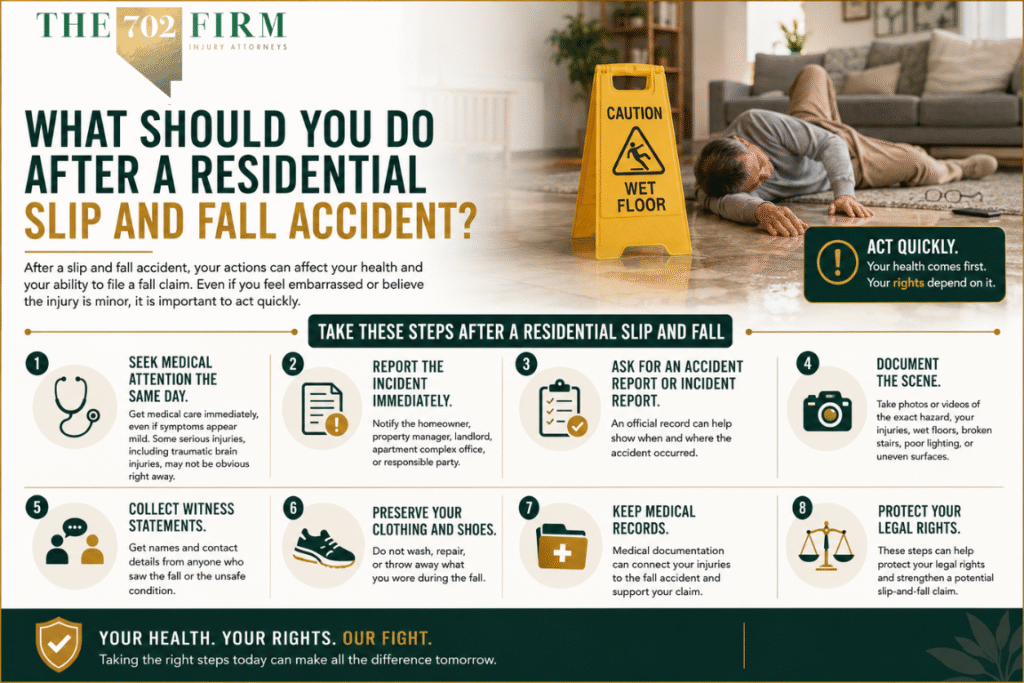
After a slip and fall accident, your actions can affect your health and your ability to file a fall claim. Even if you feel embarrassed or believe the injury is minor, it is important to act quickly.
Take these steps after a residential slip and fall:
These steps can help protect your legal rights and strengthen a potential slip-and-fall claim.

Yes, homeowner’s insurance can cover slip-and-fall injuries, but it depends on who was injured, where it happened, and whether the homeowner may be legally responsible.
A standard homeowners policy typically includes liability protection, which can cover injuries or property damage caused by the policyholder or family members to others. For a slip-and-fall claim, the key issue is usually negligence: the insurer generally pays under liability coverage only if the homeowner’s negligence caused the injury, such as failing to fix or warn about a dangerous condition.
There may also be medical payments to others coverage, sometimes called Coverage F or MedPay. This can pay limited medical expenses for a guest injured in a covered incident, often regardless of fault, up to the policy limit.
Common examples that may be covered include a guest slipping on an unmarked wet floor, tripping on a broken step, falling because of poor lighting, or slipping on ice that the homeowner should reasonably have addressed. Coverage is less likely if the injured person is a household member, the fall was intentional or work-related, the injury happened in a business/rental context excluded by the policy, or the homeowner had no legal responsibility.
For serious injuries or disputed fault, a slip and fall lawyer can communicate with the insurance company, review the policy, gather medical documentation, and help pursue a fair settlement.
A slip-and-fall victim may be able to pursue compensation for both financial and personal losses. Slip-and-fall claims may include medical expenses, lost income, and other damages related to the accident.
Compensation may cover:
In Nevada, there is no cap on economic or non-economic damages in most personal injury cases. This means compensation may depend on the severity of the injuries, the impact on the injured party’s life, and the available evidence.
Slip-and-fall accidents are more common than many people realize. According to data from the National Safety Council, fall accidents accounted for 35% of all preventable injuries. These accidents can happen in homes, apartment complexes, retail stores, walkways, parking lots, and other places where visitors rely on property owners to keep the property safe.
Residential property slip-and-fall injuries are especially concerning because visitors may not expect serious hazards on someone else’s property. A loose stair, a wet floor, poor lighting, or an uneven surface can pose a serious risk when the property owner fails to address these hazards.
The deadline to file a slip-and-fall lawsuit depends on where the accident occurred. In Nevada, you generally have two years to file a slip-and-fall claim. California law also allows 2 years to file a slip-and-fall lawsuit.
Missing the deadline can prevent an injured person from pursuing a personal injury lawsuit, even if the property owner’s negligence caused the fall. Because evidence can disappear quickly, it is important to act quickly after the accident.
You should consider contacting a slip and fall lawyer when you have suffered injuries, needed medical care, missed work, or believe the property owner failed to keep the premises safe. A personal injury attorney can help with:
For injured victims in Las Vegas, THE702FIRM Injury Attorneys provides legal guidance on slip-and-fall cases involving residential properties, apartment complexes, private homes, and other unsafe locations.
THE702FIRM Injury Attorneys understand how overwhelming a fall injury can be. Medical bills can pile up, lost income can create financial stress, and the insurance company may not offer a fair settlement without strong evidence and legal pressure. Our firm helps injured victims by focusing on the facts that matter most:
From the first free case evaluation through the legal process, the law firm works to help slip-and-fall victims understand their options and pursue the compensation they may deserve.

If you were injured in a slip and fall accident on residential property, do not wait to get help. Property owners must maintain reasonably safe conditions for visitors, and they may be held liable for serious injuries caused by negligence.
Contact THE702FIRM Injury Attorneys today for a free consultation. A Las Vegas slip and fall lawyer can review your case, explain your rights, and help you understand the next steps after a residential property slip and fall injury.