Las Vegas Premises Liability Lawyer in Nevada

Free Confidential Consultation for Human Trafficking Victims
Free Confidential Consultation for Human Trafficking Victims

Property owners and businesses must take reasonable steps to keep their premises safe for lawful visitors. When they overlook a hazard or leave a known danger unaddressed, someone can get seriously hurt. A Las Vegas premises liability lawyer can investigate what happened and whether the property’s responsible parties failed to use reasonable care.
At THE702FIRM Injury Attorneys, we help locals and visitors injured at stores, hotels, apartment complexes, private homes, and other Las Vegas properties. Our team looks beyond the accident report to understand who controlled the area and what should have been done to prevent the injury.
You may be unsure whether to accept an insurer’s offer or even whether you have a claim. Speak with our Las Vegas premises liability attorney before deciding.
Call us today for a free consultation. Our premises liability lawyers are ready to fight for the fair compensation you’re owed.
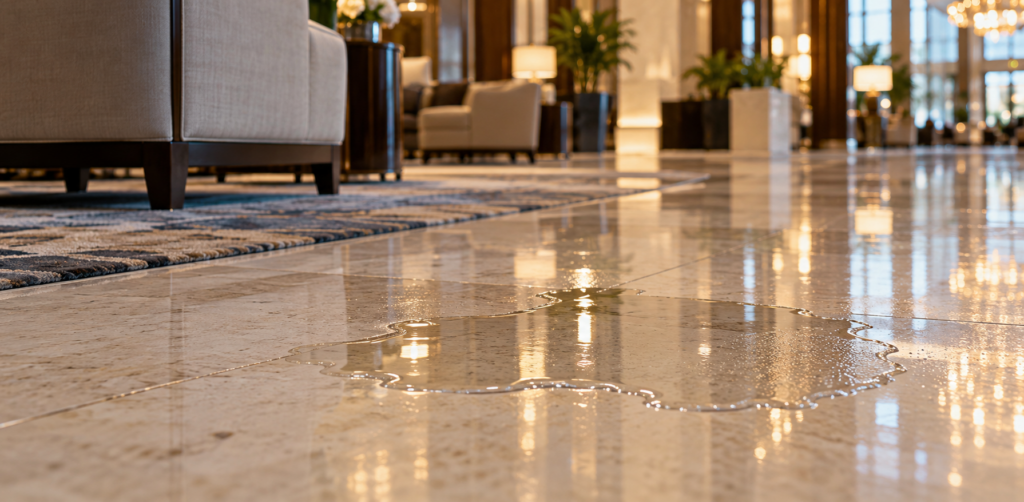
An injury investigation starts with details that can disappear. Staff may clean the area, repair a broken fixture, or record over surveillance video. We move quickly to request evidence before the scene changes or records are lost.
Our work may include:
We also handle communications with the insurance company. This includes responding to information requests, reviewing settlement offers, and challenging claims that don’t match the evidence. You receive updates on your case and explanations of upcoming decisions.
Some cases involve several businesses working at one location. We review leases and service contracts to understand each party’s duties. If a premises liability lawsuit is appropriate, we prepare the evidence needed to support it. Throughout that process, we work to document the full effect of your injuries without promising a particular outcome.
Premises liability is the area of personal injury law that addresses injuries caused by unsafe property conditions. A claim generally requires proof that someone owed you reasonable care, failed to meet that duty, and caused an injury with resulting losses. Being hurt on someone else’s property alone does not establish negligence.
Nevada premises liability law generally requires owners and occupiers to exercise reasonable care. Nevada does not apply rigid distinctions between business visitors (invitees) and social visitors (licensees). In Moody v. Manny’s Auto Repair, the Nevada Supreme Court said it would “abandon former principles of landowner liability based upon the status of the person injured on the premises,” holding instead that “an owner or occupier of land should be held to the general duty of reasonable care when another is injured on that land.” The question is “whether the owner or occupier of land acted reasonably under the circumstances.”
For a typical negligence claim, we examine four elements:
Reasonable care can involve inspections, repairs, warnings, or restricting access to a dangerous area. The precautions depend on the risk and circumstances.
Trespassers receive different treatment under NRS 41.515. Exceptions include willful harm, discovered danger, and qualifying injuries to children from artificial conditions. The child exception, often called attractive nuisance, has several requirements; an accessible pool does not automatically establish liability.
Recreational use can also limit liability under NRS 41.510, subject to exceptions. A Nevada premises liability attorney should review how these rules apply to your visit.
For many claims, notice is central. Actual notice means the responsible party knew about the dangerous condition. Constructive notice means the circumstances support finding that the party should have discovered it through reasonable care.
We look for evidence that explains when the hazard appeared and what happened afterward. A complaint, repair ticket, or employee message may show actual knowledge. Video, witness observations, or inspection records may help establish how long the condition existed. The inquiry changes when the business or its employees created the danger.
A continuous or recurring hazard can also matter. For example, evidence of debris repeatedly accumulating in a self-service area may support constructive notice. This is a fact-specific rule, not a shortcut that applies to every spill. We investigate the pattern, the business’s knowledge, and whether its precautions addressed the risk.
An owner may argue that the hazard was an open and obvious danger. Visibility alone does not end a claim in Nevada. In Foster v. Costco Wholesale Corp., 128 Nev. 773, 291 P.3d 150 (2012), the Nevada Supreme Court adopted the rule in the Restatement (Third) of Torts and held that “the open and obvious nature of a dangerous condition does not automatically relieve a landowner from the general duty of reasonable care.” Whether reasonable care required further precautions depends on the circumstances, including whether the owner should have anticipated someone getting hurt. We examine the hazard, nearby distractions, available routes, and any warnings, rather than relying on a photograph taken after the accident.
Spills, loose flooring, uneven walkways, and poor lighting can cause serious injuries. In slip-and-fall accidents, determining liability often involves examining whether a dangerous condition existed and whether the property owner could have corrected it. Understanding property owner responsibility is especially important when evaluating maintenance failures, while hotel slip-and-fall accidents may require additional evidence, such as housekeeping records, guest complaints, and surveillance footage.
Broken locks, ignored threats, and inadequate security measures can expose visitors to preventable assaults. In cases involving negligent casino security, we review surveillance footage, prior incidents, staffing levels, and whether reasonable precautions were taken. For innkeepers, NRS 651.015 sets a two-part test requiring that the wrongful act was foreseeable and that the owner failed to exercise due care or take reasonable precautions, with foreseeability resting on a failure to exercise due care or on notice of prior similar incidents.
Unsafe pool access, damaged equipment, slippery decks, and inadequate safety measures can contribute to serious injuries. Investigating swimming pool accidents often requires reviewing safety barriers, inspection records, maintenance practices, and supervision circumstances to determine whether negligence contributed to the incident.
Unexpected stops, malfunctioning doors, damaged steps, and mechanical defects can seriously injure passengers. Determining liability in elevator and escalator accidents may require examining inspection reports, repair histories, maintenance contracts, and the involvement of outside service companies responsible for keeping the equipment safe.
Damaged pavement, unsafe pedestrian routes, broken lighting, and inadequate security can create dangerous conditions in parking areas. Evidence in parking garage accident cases may include surveillance footage, lighting and maintenance records, prior complaints, and the layout of entrances, exits, and pedestrian walkways.
Poorly stacked merchandise, unsecured displays, and loose fixtures can fall and strike unsuspecting visitors. Establishing liability in these personal injury claims may require photographs of shelving conditions, stocking and inspection procedures, employee statements, and witness accounts showing how the object fell and who handled it before the injury.
Dog attacks can raise liability questions involving the animal’s owner, handler, and others responsible for the premises. When investigating dog bite injuries, we consider who controlled the animal, whether there were previous warnings or aggressive incidents, and what precautions were taken. Simply owning the property where an attack occurred does not automatically make someone liable for the dog’s actions.
Loose handrails, broken steps, unstable balcony guards, and deteriorating structural components can lead to severe falls. As with other fall cases, determining responsibility may involve reviewing maintenance records, prior repair complaints, and applicable safety standards. We also investigate whether a structural defect existed before the accident or developed during the incident.
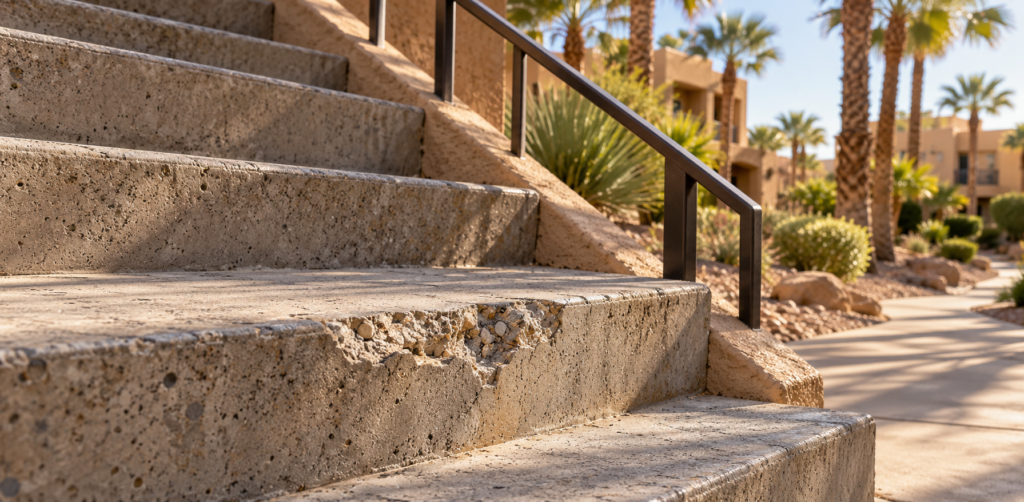
The location helps identify which records to request and who may have controlled the area. We investigate injuries at:
Investigating casino injury claims may require reviewing surveillance footage, security dispatch records, and the responsibilities of separate operators within one building. Similarly, a hotel premises liability attorney in Las Vegas can investigate who maintained the specific area where you were hurt and whether a property owner or another party failed to address a dangerous condition.
You may have a valid claim if someone’s failure to use reasonable care on the property caused your injury and losses. To sue for premises liability in Nevada, you need evidence connecting the responsible party’s conduct to your harm. Photos, witness information, and medical records help us assess that connection during a free case review.
Yes, being a guest does not prevent a claim. You still must prove the applicable legal requirements; a business is not responsible for every injury that happens there. An assault claim involving an innkeeper requires particular attention to NRS 651.015, including foreseeability and precautions against the wrongful act.
An obvious hazard does not automatically defeat a Nevada premises liability claim. Under Foster v. Costco, the open and obvious nature of a condition does not by itself relieve a landowner of the general duty of reasonable care. Visibility can still affect whether the property operator acted reasonably and whether you share fault. We look at the full setting, including whether a visitor could reasonably avoid the hazard while using the property.
Potentially, if the landlord’s negligence caused your injury. Repair requests, maintenance records, lease terms, and control of common areas can help explain responsibility. The landlord, management company, tenant, or contractor may have different roles, so a review should look beyond whose name appears on the lease.
Yes, leaving Nevada does not by itself prevent you from pursuing a claim for an injury here. Keep travel records, local treatment information, and witness contact details. We can discuss the investigation remotely, although litigation may require your participation in examinations, depositions, or other proceedings.
The name on the building does not always identify everyone involved. Potentially responsible parties include:
Contracts help explain each party’s role, but we also examine what each party actually did. More than one party may be involved.
Government cases require separate analysis. NRS 41.035 caps tort damages against a public entity at $200,000 per cause of action and bars punitive damages, and NRS 41.036 governs filing a claim with the governmental entity. Private property rules should not simply be assumed to apply.
Premises liability injuries can include fractures, head trauma, spinal injuries, burns, and lasting scars. A premises liability injury lawyer evaluates both the treatment already received and the limitations that may continue after treatment ends.
Depending on the evidence and applicable law, recoverable losses may include:
We use medical records, provider opinions, employment records, and your account of daily limitations to document these losses. Fair compensation should reflect your supported future needs and the expenses you already face. No responsible estimate comes from an injury label alone.
Get urgent medical help first. When you can safely take these steps, they can help protect evidence:

Under NRS 11.190(4)(e), the usual deadline to file a personal injury lawsuit is two years. Exceptions can affect timing, so have an attorney calculate your deadline. Government tort claims also have a two-year filing provision under NRS 41.036; that filing is not a prerequisite to suit and does not replace the lawsuit deadline. Nevada’s modified comparative negligence rule, NRS 41.141, reduces damages by your share of fault. Recovery is barred if your fault exceeds the combined negligence of the defendants from whom you seek recovery, commonly called the 51% bar.
An insurer may argue that you were looking at your phone or were not watching where you walked. We examine whether the evidence supports that defense and how the property’s condition contributed. Don’t assume an accusation of shared fault settles the issue or means you should stop asking about your legal options.
You do not need to know which company caused your injury before you ask for help. Start with what you remember and the questions you have. We can discuss what needs investigating and what the next step would mean for you.
THE702FIRM Injury Attorneys serves people injured in Las Vegas, North Las Vegas, and Clark County, including visitors who have returned home. Free consultations are available 24/7. Contact us online to discuss your situation. There is no fee unless we win.
The decision to hire a lawyer is yours. Your first conversation gives you a chance to get clear answers before you decide. Schedule Your Free Consultation