Nevada Dog Bite Laws: Understanding NRS §202.500 and Legal Liability

Free Confidential Consultation for Human Trafficking Victims
Free Confidential Consultation for Human Trafficking Victims

Nevada law governs dog bite liability through a combination of statutes, personal injury law, court decisions, and local animal control regulations. Unlike some states that impose automatic liability on dog owners, Nevada applies a negligence-based system supported by criminal statutes such as Nevada Revised Statutes §202.500. Understanding how dangerous and vicious dogs are defined and how liability is determined is essential for evaluating legal responsibility after an animal attack.
Unlike some states that impose automatic strict liability on dog owners for any bite, Nevada applies a negligence-based system. Courts examine whether the owner knew or should have known about the dog’s dangerous tendencies, whether local animal control regulations were violated, and whether the owner took reasonable precautions to prevent foreseeable harm.
At THE702FIRM Injury Attorneys, our Las Vegas dog bite lawyers help victims across Nevada take control of the legal process after an animal attack. Our firm has recovered millions of dollars for injured clients by holding dog owners and other responsible parties accountable. We handle dog-bite injury cases using a direct, evidence-based approach that focuses on medical records, animal-control reports, and Nevada law. From the first call through resolution, we work in the first person because your case deserves personal attention.
This guide explains Nevada’s dog bite framework, including statutory definitions, reporting requirements, the six-level bite severity classification system, and the distinction between negligence and strict liability.
Nevada Revised Statutes §202.500 is the primary criminal statute regulating dangerous and vicious dogs statewide. The statute establishes definitions, criminal penalties, and procedures for handling dogs that pose a threat to public safety.
The statute serves three primary legal functions:
The statute does not automatically impose civil liability for injuries. Instead, it works alongside negligence law to determine legal responsibility.
Nevada law distinguishes between dogs that present a potential threat and those that have already caused serious harm.
| Classification | Legal Definition | Key Criteria | Legal Consequences |
| Dangerous Dog | Dog that behaves menacingly without provocation | Two incidents within 18 months OR used in a crime | Animal control monitoring, confinement requirements |
| Vicious Dog | Dog that causes substantial bodily harm or death | Serious injury or continued dangerous conduct after warning | Criminal charges possible; stricter confinement rules |
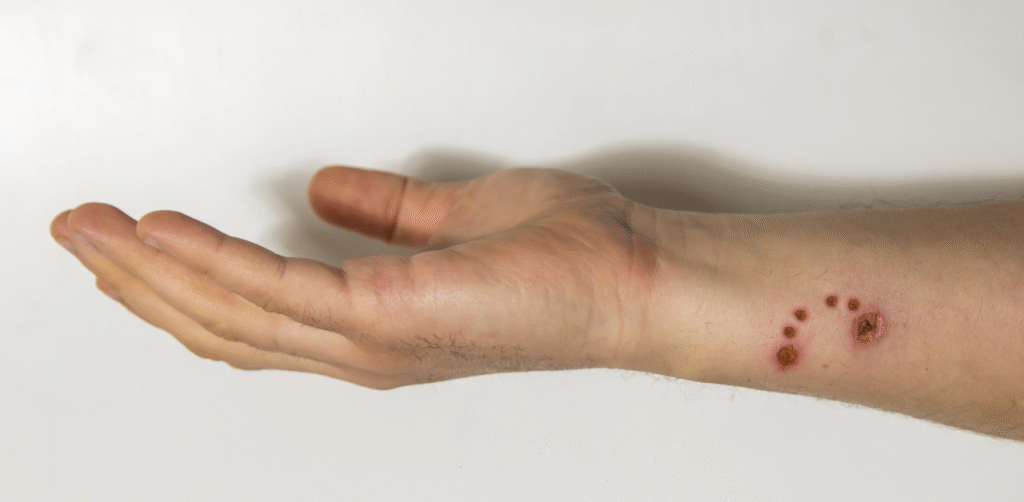
Nevada law itself does not define bite severity levels. However, veterinary and behavioral science uses a widely accepted six-level classification system to evaluate aggression. This system helps animal control agencies and courts assess risk and determine appropriate legal action. Higher bite levels significantly increase the likelihood that animal control will classify a dog as vicious under NRS 202.500.
| Level | Description | Legal and Behavioral Significance |
| Level 1 | Aggressive display, snapping without contact | Warning behavior indicates risk escalation |
| Level 2 | Teeth contact without skin puncture | Demonstrates loss of inhibition |
| Level 3 | One to four shallow punctures | Evidence of intentional bite behavior |
| Level 4 | Deep punctures with clamping | Indicates sustained attack behavior |
| Level 5 | Multiple deep bites or repeated attacks | Strong evidence of a dangerous or vicious classification |
| Level 6 | Fatal attack | Meets statutory criteria for vicious dog designation |
Nevada’s one-bite rule means a dog owner is not automatically liable for a bite unless the owner knew, or reasonably should have known, that the dog posed a danger. Liability is based on whether the owner had prior notice of the dog’s aggressive behavior or failed to exercise reasonable care in preventing foreseeable harm.
In Nevada, the rule operates as part of negligence law rather than as a standalone statute. Courts examine whether the owner had actual or constructive knowledge of the dog’s dangerous tendencies before the attack occurred. Prior bite incidents, documented aggressive conduct, animal control warnings, or a formal dangerous dog designation can establish that the owner was aware of the risk. Once such knowledge exists, the owner has a legal duty to take reasonable precautions to prevent injury.
The rule does not require proof of a prior bite in every case. A history of threatening behavior, lunging, snapping, or attempts to attack may be sufficient to demonstrate foreseeability. Violations of leash laws, confinement requirements, or dangerous dog restrictions can also support a finding that the owner failed to act responsibly.
Courts apply this rule to determine whether the owner’s conduct met the standard of reasonable care under the circumstances. If an owner knew or should have known that the dog presented a risk and failed to take appropriate preventive measures, the owner may be held legally responsible for injuries resulting from fatal dog attacks.
Dog bite injuries are rarely minor. Even a single bite can cause complications that extend far beyond the initial wound.
Common injuries include:

Nevada law distinguishes between criminal penalties imposed by the state and civil liability imposed through dog bite claims. These two legal systems serve different purposes but may arise from the same dog attack incident.
Criminal liability applies when a dog owner violates Nevada Revised Statute §202.500 or related animal control laws. An owner may face criminal charges if they knowingly keep a dog that has been declared vicious, fail to comply with legal restrictions imposed on a dangerous or vicious dog, or allow a dog to cause substantial bodily harm or death. In these cases, the state prosecutes the owner to enforce public safety laws. Criminal penalties may include misdemeanor or felony charges, depending on the severity of the injury and whether the owner had prior notice of the dog’s classification.
Civil liability applies when an injured person seeks compensation for harm caused by a dog attack. In Nevada, civil responsibility is based on negligence, meaning the injured person must show that the owner failed to exercise reasonable care in controlling the dog. Civil liability focuses on compensating the injured person rather than punishing the owner.

At THE702FIRM Injury Attorneys, we focus on communication, preparation, and results in every dog bit case. Our approach reflects how clients experience the process, not how insurance companies prefer it.
As one client, Monica W., shared:
We really enjoyed working with this firm. Not only can car accidents be stressful, but my husband was hurt and we reached out to this firm through a referral. I am so happy we did. Insurance can be confusing…mixed with legal issues…BUT this firm made the process very easy. The way they communicated what was going on and the next steps were top notch for us. I like to be kept in the loop. We worked with Madlen and she was an absolute pleasure to work with. Obviously, I hope we do not need legal services again for any issue, but IF WE DO WE WOULD 100% WORK WITH THIS LAW FIRM. Thanks, everyone.
If you or a loved one suffered injuries from a dog attack or animal bite in Nevada, speak with a Vegas dog bite attorney who understands local laws and real-world outcomes. Schedule a free consultation today for a free case evaluation. We are ready to help you recover compensation and move forward.